
Introduction
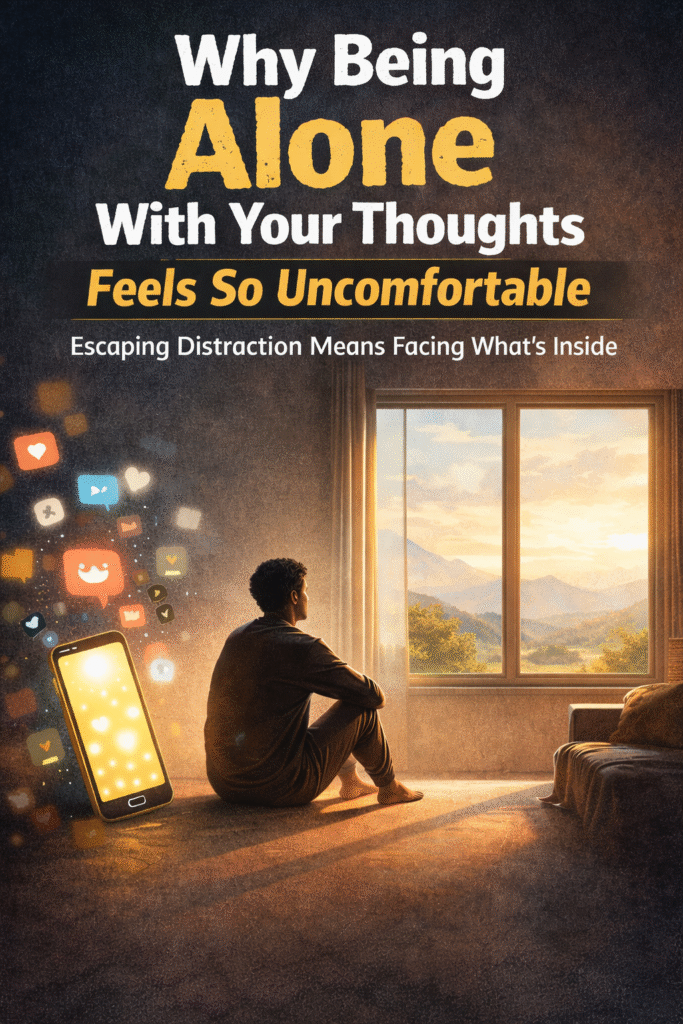
Being alone with your thoughts sounds simple. Almost harmless. Yet for many people, it’s one of the most uncomfortable states to be in.
We reach for our phones the moment there’s a pause. We play music while cooking, podcasts while walking, videos while resting. Silence feels awkward. Empty. Heavy. But why?
The struggle with being alone with your thoughts isn’t about boredom. It’s about what surfaces when there’s nothing left to distract you. And that discomfort says more about conditioning than weakness.
This isn’t a piece about forcing silence or romanticising solitude. It’s about understanding what’s happening beneath the surface and why so many of us avoid quiet without realising it.
When Being Alone Started Feeling Difficult
There was a time when mental quiet was normal. Long waits. Slow travel. Idle moments. Sitting without stimulation wasn’t seen as a problem to solve.
Today, those same moments feel restless. Even a few minutes without sound or input can trigger unease. Not panic, just a subtle itch to fill the space. This didn’t happen overnight.
Our minds adapt to patterns. When constant stimulation becomes the default, stillness feels unfamiliar. And unfamiliarity often feels unsafe, even when it isn’t.
Discomfort Is Not the Same as Boredom
We often say, “I get bored easily.” But boredom usually comes from lack of engagement or meaning.
What many people experience when they’re alone with their thoughts is different. Thoughts start looping. Emotions show up uninvited. Old memories knock softly. Questions rise without answers. That’s not boredom. That’s awareness.
Silence doesn’t create these thoughts. It simply removes the noise that was covering them. All those thoughts you have stacked up just arrived all together, once they got the space.
How Constant Distraction Trains the Mind
Most distractions today are passive. You don’t choose them consciously.
- Autoplay content
- Endless scrolling
- Background sound
- Notifications filling gaps
Over time, the mind learns that quiet equals absence, and absence feels wrong. The brain starts expecting stimulation the way it expects light during the day.
So when stimulation stops, the nervous system doesn’t relax. It searches. This is why being alone with your thoughts can feel uncomfortable even when nothing is actually wrong.
With that said, intentional sound can support calm and clarity. Explore our grounded take on sound therapy and how it differs from everyday noise.
What Science Suggests
Neuroscience shows that the brain operates differently depending on stimulation.
- High stimulation keeps attention outward
- Quiet shifts processing inward
- Internal processing brings emotional material to the surface
Studies in psychology and cognitive science suggest that constant external input reduces our tolerance for internal awareness, as research shows increased distraction from the environment can compromise focus and internal cognitive processes. When the mind rarely rests, self-reflection feels intense instead of natural. This doesn’t mean silence is superior. It means balance matters.
Why Silence Feels “Too Loud”
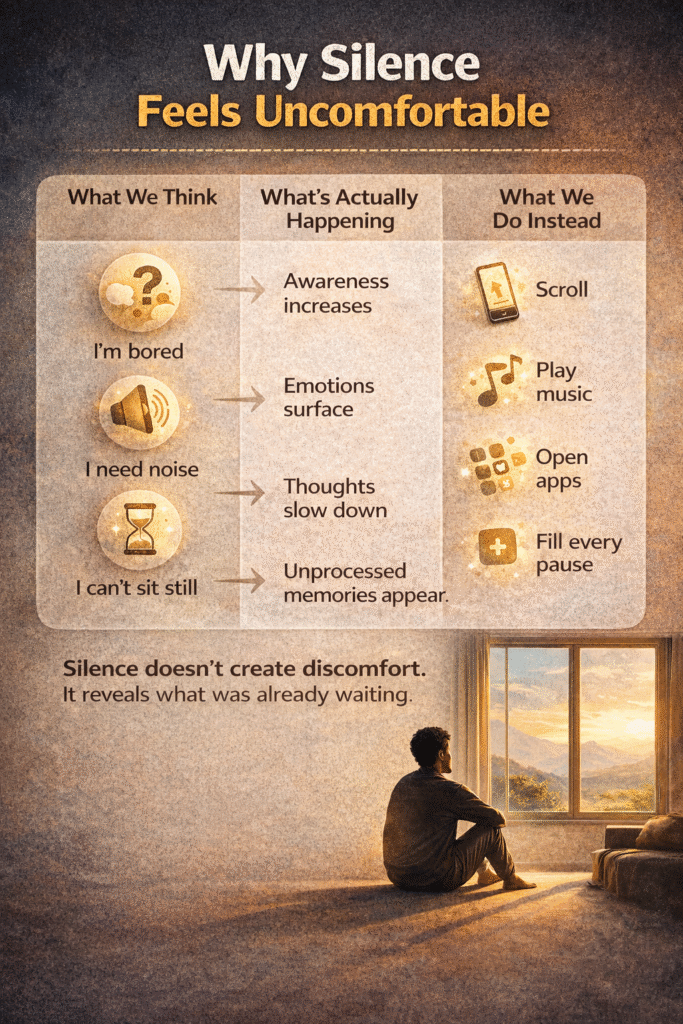
People often say silence feels loud. What they usually mean is:
- Thoughts become clearer
- Emotions become noticeable
- Inner dialogue gets sharper
When there’s no background noise, the mind fills the space with unfinished business. Things you didn’t process earlier finally ask for attention.
This can feel overwhelming if you’re not used to it. So the instinct is to escape, not because silence is harmful, but because it’s unfamiliar.
We Mistake Avoidance for Preference
Many people say they prefer noise. Music helps them think. Sound helps them relax. Distraction helps them cope. Sometimes that’s true. Intentional sound can be grounding.
But sometimes, preference is just familiarity wearing a comfortable label. When avoidance becomes automatic, the mind forgets how to sit with itself. And being alone with your thoughts starts to feel like a threat instead of a skill.
This Is Not About Forcing Stillness
Let’s be clear. This isn’t about:
- Meditating for hours
- Cutting off music
- Judging distraction
- “Fixing” your mind
It’s about noticing your reaction to quiet. Can you sit for five minutes without reaching for something? Can you walk a short distance without filling the space?
If not, that’s not failure. That’s information.
Learning to Sit With Thoughts, Gently
You don’t build tolerance by force. You build it through exposure, slowly. Try this:
- One quiet task a day
- Two minutes without sound
- No analysis, just observation
Notice what comes up. Not to solve it. Just to see it. The goal isn’t silence. The goal is choice.
Why This Matters More Than We Admit
When we avoid being alone with our thoughts, we also avoid clarity. Unprocessed emotions don’t disappear. They wait. Mental fatigue builds quietly. Focus weakens. Emotional reactions feel sharper.
Learning to sit with your thoughts doesn’t make life easier instantly. But it makes it steadier. And steadiness changes everything.
Final Thoughts
If being alone with your thoughts feels uncomfortable, that reaction itself is worth paying attention to.
Not because something is wrong with you, but because it reveals how rarely the mind is given space anymore. We live surrounded by sound, input, and distraction, often without noticing when or why we reach for them. Silence then feels unfamiliar, not dangerous, just… unused.
This article isn’t asking you to like quiet or chase stillness. It’s simply holding up a mirror to a habit most of us share without questioning. The rest of these words explore how that habit formed, what it quietly does to mental clarity, and why learning to pause, even briefly, can change how the mind responds to everyday life.
Sometimes growth doesn’t start with doing more. It starts with noticing what we avoid, and gently asking why.
Mind Lift Now is a space for thoughtful growth. No trends. No mental overload. Just honest conversations about the mind, habits, and emotional balance, written to help you pause, reflect, and move forward with clarity.
FAQs
Because constant stimulation trains the mind to stay outward-focused. When that stimulation stops, awareness feels intense.
Occasional distraction is normal. But constant avoidance can increase mental fatigue and reduce emotional clarity.
Silence doesn’t create thoughts. It reveals thoughts that were already there.
Start small. Short moments of quiet without judgment build tolerance over time.
Reference:
https://greatergood.berkeley.edu/article/item/why_silence_is_so_uncomfortable
https://www.psychologytoday.com/us/blog/the-athletes-way/201703/the-power-being-alone-your-thoughts
https://www.theatlantic.com/magazine/archive/2016/07/the-illusion-of-time/485559