
Introduction
We rarely sit in silence anymore. While scrolling, there’s music. While travelling, there’s a playlist. Even moments meant for rest often come with background sound. Most of us don’t question it. We call it preference, interest, or habit. But over time, constant noise and mental health have become more connected than we realise.
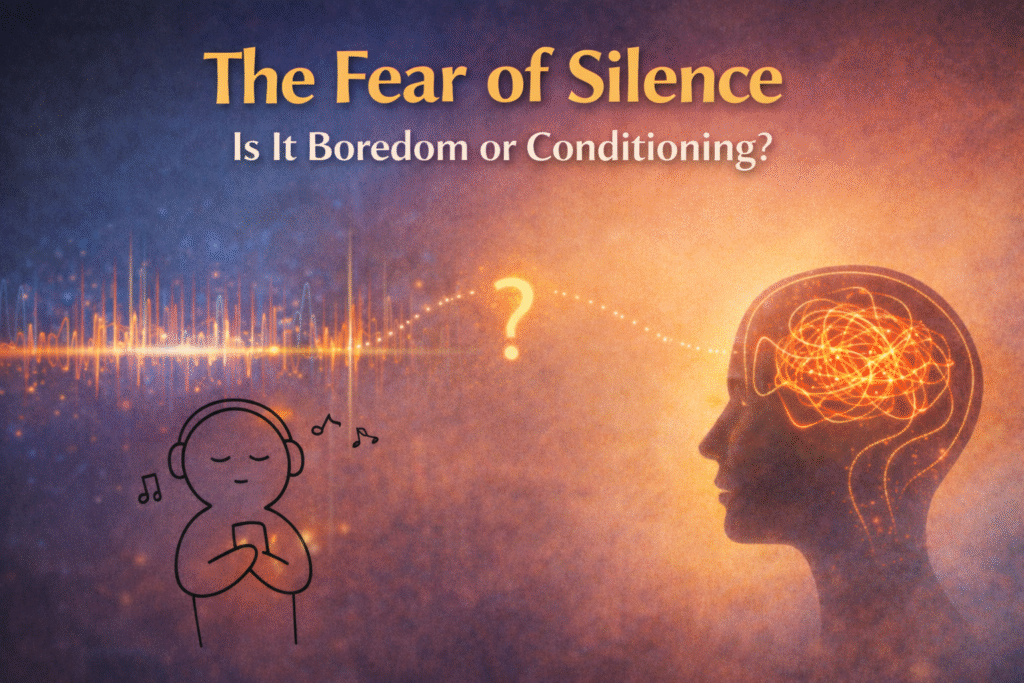
The discomfort we feel in silence is often labelled as boredom. But what if it’s not boring at all? What if it’s conditioning? This article isn’t against sound but about awareness. About noticing how constant stimulation shapes the mind, and what happens when quiet disappears from daily life.
When Silence Started Feeling Uncomfortable?
There was a time when silence was ordinary. The waiting rooms were quiet. Travel involved long stretches of nothingness. Sitting alone didn’t feel strange.
Today, silence feels unfamiliar. Even a few quiet minutes can feel uneasy, restless, or “empty.” This shift didn’t happen suddenly. It happened slowly, through constant exposure to sound and stimulation.
The brain adapts to what it experiences most. When sound becomes the default, silence begins to feel unusual.
Noise as Stimulation, Not Choice
Much of the sound we live with isn’t intentional. It’s automatic.
- Autoplay videos
- Background music
- Notifications
- Ambient noise while working
Over time, the brain learns to expect this level of stimulation. Quiet moments no longer feel neutral. They feel incomplete.
This doesn’t mean sound is harmful. It means the absence of choice is what affects mental balance.
The impact of noise exposure has been linked to poorer cognitive performance, including attention and memory, especially when it interferes with sleep or stress regulation.
Constant Noise and Mental Health
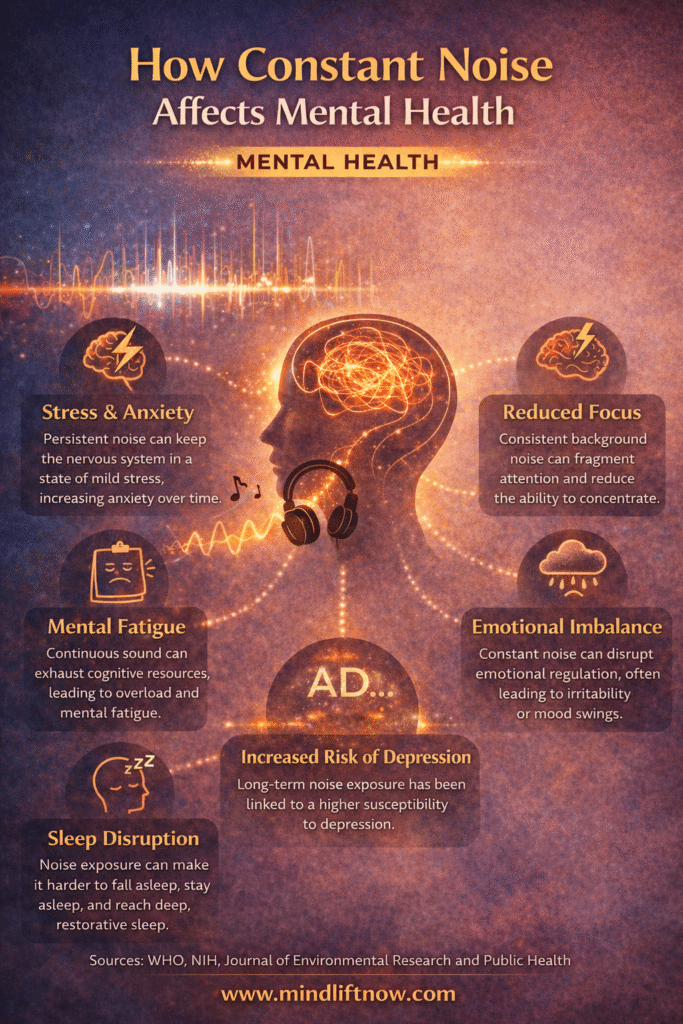
Research shows that continuous sound exposure keeps the brain in a mild alert state. Even when the sound is not loud, the nervous system stays engaged.
Studies on environmental noise and cognition have found that long-term exposure can affect:
- Attention span
- Emotional regulation
- Mental fatigue
- Stress levels
- Increase risk of anxiety and depression in adults
This is not about dramatic damage. It’s about subtle strain. The mind rarely gets a chance to reset when stimulation never stops.
The Fear of Silence: Boredom or Conditioning?
When silence arrives, thoughts surface. Emotions become noticeable. This can feel uncomfortable.
We often interpret this discomfort as boredom. But boredom usually comes from lack of meaning. What many people experience in silence is something else, awareness.
Silence doesn’t create discomfort. It reveals what has been masked by noise.
Why We Call It Interest or Passion
Many people say they focus better with sound. Others say they feel dull without it. These experiences are real.
But sometimes, what feels like interest is actually familiarity. The mind prefers what it knows. Constant sound becomes normal, not because it’s always needed, but because it’s expected.
This is where constant noise and mental health intersect quietly, without obvious symptoms.
What Science Says About Sound and the Brain
Neuroscience shows that the brain shifts states based on stimulation.
- High stimulation keeps the brain externally focused
- Quiet allows internal processing
- Periods of low stimulation support reflection and emotional balance
Research published in public health and psychology journals suggests that silence, even in short intervals, can lower stress responses and support cognitive recovery.
At the same time, studies on sound therapy show that intentional sound, such as calming frequencies or structured auditory experiences, can support relaxation and healing. The key difference is intention. Not all sound stimulation is the same.
Silence Is Not the Opposite of Sound
This is important. Silence is not anti-sound. Quiet is not rejection of music.
Healthy mental balance comes from variation, not extremes. Just as intentional sound can support wellbeing, intentional silence gives the mind space to settle. This balance is what protects mental clarity.
Relearning Quiet, Gently
You don’t need to force silence. Start small.
- Sit for two minutes without sound
- Travel short distances without headphones
- Let one daily task be quiet
Notice the reaction. Not to judge it, just to observe it. The goal is not silence. The goal is choice.
Why This Matters More Than We Think
When the mind never rests from stimulation, clarity fades quietly. Emotional responses feel sharper. Focus feels fragile.
Creating small spaces of quiet allows the nervous system to reset. This supports emotional awareness, resilience, and mental steadiness. This is why conversations around constant noise and mental health matter today.
Final Thoughts
We are not afraid of silence. We are just no longer used to it.
Noise has become normal, not because it’s always needed, but because it’s always present. Healing doesn’t come from removing sound, but from restoring balance.
At Mind Lift Now, growth is explored through awareness, not pressure. Silence is not a rule. It’s an option worth remembering.
FAQs
Not always. But constant, unintentional noise can increase mental fatigue and stress over time.
Because the mind is used to stimulation. Silence brings awareness, which can feel unfamiliar.
No. Intentional sound can support mental well-being. But the type of sound and timing for practicing sound therapy are entirely your choice.
Noise is often unstructured and constant. Sound therapy is intentional and designed to calm the nervous system.
By choosing when to listen and when to pause. Small moments of quiet are enough.