
We all have days when life feels heavy. The last thing you want to hear at that moment is, “Just be positive” or “Look on the bright side”. While encouragement is good, there’s a line where positivity stops helping and starts hurting. That’s where toxic positivity comes in. It’s the idea that no matter how tough things get, you must stay happy and optimistic. But here’s the truth, forcing positivity can actually make things worse.
In this blog, we’ll break down what toxic positivity really means, why it’s harmful, and how you can choose a healthier, more balanced approach to life.
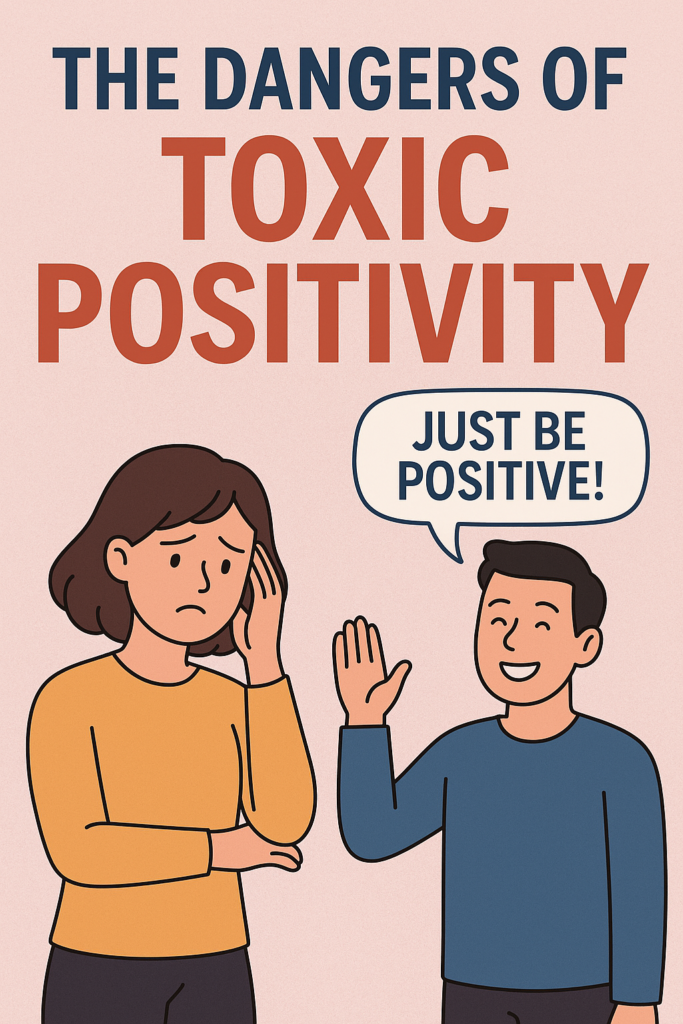
What is Toxic Positivity?
Toxic positivity is the belief that no matter how bad things are, you should stay positive and avoid negative feelings.
It’s the idea that there’s no room for sadness, anger, grief, or frustration, that if you focus only on the bright side, everything will magically be fine.
While it sounds harmless, toxic positivity can make people feel unheard, misunderstood, and even ashamed for having normal human emotions.
How Does Toxic Positivity Differ From Healthy Positivity?
Being positive is not the problem. In fact, having a hopeful outlook can help us overcome challenges.
The problem is when positivity becomes forced, when it dismisses or denies real emotions.
Healthy vs Toxic Positivity
| Healthy Positivity | Toxic Positivity |
| Acknowledges pain while still holding hope. | Denies pain and demands constant cheerfulness. |
| Offers support without judgement. | Dismisses feelings with quick, “count on the blessings” remarks. |
| Encourages without pressure. | Pressures you to be happy no matter what |
One validates the feelings while the other ignores them.
What Are The Examples of Toxic Positivity?
Sometimes toxic positivity can come from others. Other times, you do it to yourself without noticing. Some signs of toxic positivity is listed below:
- You hide your true feelings to avoid being ‘negative’.
- You feel guilty or weak for feeling sad, angry or scared.
- You use positive quotes to avoid dealing with real problems.
- You avoid conversations about struggles because it feels “heavy”.
If these sound familiar, it’s time to rethink how you approach your emotions.
Here are some examples of toxic positivity:
- “Good vibes only”.
- “Everything happens for a reason”.
- “Just think happy thoughts”.
- “It could have been worse”.
- “Don’t worry, always be happy”.
You might have heard or even said any of these. While these may be meant to help, they can unintentionally dismiss the real pain.
Why is Toxic Positivity Harmful?
- It shuts down honest conversations
If someone feels they can’t share their struggles without being told to ‘be positive’ or ‘look at the bright side’, they might stop opening up altogether.
- It creates emotional pressure
Everyone knows that life is not meant to be perfect. It is exhausting to feel pressured to constantly maintain a facade of happiness.
- It invalidates emotions
Your emotions, be it good or bad, are messages from your mind and body. Neglecting those issues only buries them deeper; it doesn’t make them go away.
- It can worsen mental health
Keeping your feelings bottled up can lead to more stress and anxiety, and it might even make you feel depressed. It’s really important to let your emotions out and talk about how you feel to stay mentally healthy.
How Can You Avoid Toxic Positivity?
If you want to encourage others (or yourself) without falling into the toxic positivity trap, here’s what you can do:
- Acknowledge feelings
Instead of trying to quickly fix someone’s mood, just be present for them. Let them own their feelings. You can use words like, ‘I see you’, ‘that was really tough to handle’.
- Allow space for all emotions
It’s okay to cry, to be angry, or to be scared. Emotions need space to be felt before they can be healed.
- Offer support, not solutions
Sometimes the best thing to say is, ‘I’ll be here whenever you want”.
- Be honest with yourself
If you’re having a hard time, don’t pretend everything is fine. Self-compassion starts with honesty.
Here are some commonly used phrases that validate feelings while still offering hope:
- “I know this is hard, but I believe in you.”
- “It’s okay to not to be okay.”
- “Your feelings are valid.”
- “You don’t have to go through this alone.”
- “I am here to listen.”
When Positivity Helps, and When It Doesn’t
Positivity is powerful when it inspires action, offers comfort, or reminds us of your inner strength.
But it’s harmful when it silences pain or makes people feel guilty for being human.
Hope and hurt can be held closer at the same time. They are not opposites; instead, they are both integral parts of the human experience.
Learn the 5 steps to use positive affirmations without forcing positivity.
Final Thoughts
Positivity has its place, but it should never come at the cost of emotional honesty.
Toxic positivity teaches you to hide your struggles, but real growth comes from facing them. Instead of pretending to be fine, you can create spaces where it’s safe to be real.
Life is made up of both bright days and difficult times. We can value the beauty of a rainbow while still acknowledging the presence of rain.
Have you ever experienced toxic positivity? Share your thoughts in the comments.
Read more about mental wellness and self-help.
FAQ
1. Is positivity always bad?
Not at all. Positivity can be uplifting and helpful when it’s genuine. The problem is not positivity itself, but toxic positivity, when people push constant cheerfulness and ignore real struggles. Healthy positivity makes space for sadness, anger, or frustration, and then gently helps you move toward hope. Toxic positivity skips that first step, leaving you feeling dismissed.
2. Why do people use toxic positivity?
Often, it comes from a good place. People don’t want to see someone they love in pain, so they throw quick phrases like “just be positive” or “things could be worse.” Unfortunately, this doesn’t comfort, it silences. Toxic positivity usually reflects someone’s discomfort with emotions, not a lack of care. They want to help but don’t know how to sit with hard feelings.
3. How do I respond when someone tells me “just be positive”?
You don’t need to argue. A simple response can set boundaries while protecting your emotions. You might say:
- “I appreciate your concern, but I need to feel what I’m going through right now.”
- “I value optimism too, but at this moment, I need space to process.”
This shows respect for yourself and also helps others learn that authentic support is better than quick positivity.
4. What are the dangers of toxic positivity?
Toxic positivity may seem harmless, but it can be damaging in the long run. Constantly suppressing emotions can lead to stress, anxiety, and even physical health issues. It also creates guilt, making you feel weak for not being happy all the time. Over time, this stops people from reaching out for help, leaving them isolated when they need support the most.
5. How can I avoid falling into toxic positivity myself?
Start with awareness. Instead of rushing to fix emotions with cheerful words, try listening, both to yourself and others. Remind yourself that it’s okay to say, “I feel low today.” Practice empathy with others by validating their feelings instead of minimizing them. Balance positivity with honesty, so encouragement comes at the right time and in the right way.
Reference:
https://www.verywellmind.com/what-is-toxic-positivity-5093958

