Introduction: How Sound Becomes a Path to Mindfulness
Sound is one of the most powerful yet gentle tools for calming the mind. Long before modern psychology, cultures across the world used sound to regulate emotions, deepen meditation, and restore balance. Today, sound healing and sound therapy is increasingly recognized as a valuable practice for mindfulness, stress reduction, and emotional regulation.
Sound therapy does not require musical skill or complex instruments. It simply asks you to listen with intention. Whether it is the sound of rain, a humming voice, or a resonant bowl, sound can anchor attention, soothe the nervous system, and bring the mind into the present moment.
In this blog, we explore how sound therapy supports mindfulness and meditation, the different types of therapeutic sounds, and how you can integrate them into your daily practice using tools like the Mind Lift Now mindfulness timer.
What Is Sound Therapy?
Sound therapy is the intentional use of sound vibrations to support mental, emotional, and physical well-being. In mindfulness and meditation, sound acts as a focal point, something steady for the mind to rest on when thoughts begin to wander.
From a psychological perspective, calming sounds help shift the nervous system from a stress response into a relaxation response. This creates the internal safety needed for mindfulness, clarity, and emotional balance.
Types of Sound Used in Sound Therapy
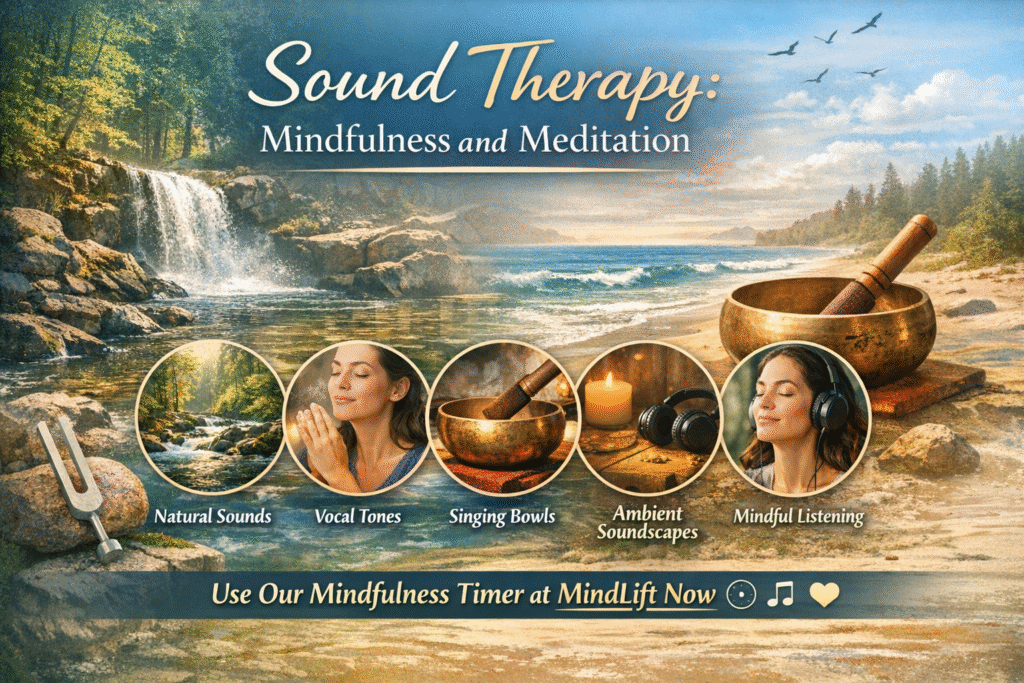
1. Natural Sounds
Natural sounds are among the most accessible and effective tools for sound-based mindfulness.
Examples include:
- Flowing water (streams, rivers)
- Ocean waves
- Rainfall
- Wind rustling through trees
- Birds chirping
- Forest ambience
Why they work:
Natural sounds have predictable yet non-repetitive patterns, which gently hold attention without overstimulation. Research shows these sounds naturally calm the nervous system, lower cortisol levels, and reduce stress. Listening to nature sounds during meditation can create a sense of grounding, safety, and connection.
Using natural sounds with a mindfulness timer allows you to sit without checking the clock, fully immersed in the experience.
2. Vocal or Human Sounds
The human voice itself is a powerful healing instrument.
Examples include:
- Gentle humming or chanting neutral tones
- Soft speaking or guided meditations
- Breath-focused sound exercises, such as slow exhaling with a hum
Why they work:
Vocal sounds stimulate the vagus nerve, which plays a key role in calming the body and regulating emotions. Humming or chanting creates soothing vibrations that can reduce anxiety and promote relaxation without the need for instruments.
In mindfulness practice, using the voice helps synchronize breath and awareness, making meditation more accessible for beginners.
3. Frequency & Tone-Based Sounds
Certain sounds work through vibration and resonance rather than melody.
Examples include:
- Tuning forks with specific frequencies for relaxation
- Singing bowls (metal or crystal) played gently
- Soft chimes or bells with slow, spaced intervals
- White noise, pink noise, or low-frequency hums
Why they work:
These sounds create resonance that supports deep relaxation, improves focus, and balances mental energy. Single tones or slow intervals prevent mental distraction and help the mind settle naturally.
Frequency-based sounds are particularly helpful for meditation sessions focused on grounding, emotional release, or deep rest.
4. Ambient Soundscapes
Ambient soundscapes combine multiple calming elements into one immersive experience.
Examples include:
- Neutral soundscapes blending nature sounds with gentle tones
- Low-volume instrumental pads without rhythm or melody
Why they work:
Ambient soundscapes create a consistent background that masks distractions and helps sustain focus. They are especially useful for meditation, sleep, or deep concentration.
These soundscapes work beautifully when paired with a mindfulness timer, allowing you to set a session length and fully relax without external interruptions.
Sound Healing Practices
Sound healing, often practiced in the form of sound baths, creates an immersive environment that gently guides the mind and body into a state of deep calm. Rather than focusing or controlling the experience, you simply allow the vibrations to move through you, supporting relaxation, emotional release, and mindful awareness.
Tibetan Singing Bowls
Tibetan singing bowls are among the most commonly used tools in sound baths. When gently struck or circled with a mallet, they produce rich, layered vibrations that travel through the body, helping release physical tension and quiet mental noise.
The nervous system naturally softens. The mind slows down, attention settles, and the body responds with a sense of ease and safety.
Benefits of sound bath meditation include:
- Deep nervous system relaxation
- Reduced anxiety and mental fatigue
- Enhanced emotional clarity
- Support for mindfulness and body awareness

During a sound bath, you don’t need to focus or control the experience. Simply lying down and listening mindfully allows the sound to guide the body into a meditative state.
Mindful Listening Exercises
Mindful listening is a simple sound-based practice that uses listening as the anchor for awareness. Instead of watching the breath or thoughts, attention rests on sound as it arises and fades.
You may practice by:
- Listening attentively to a single sound, such as rain, wind, or a sustained tone
- Noticing subtle changes in pitch, intensity, and texture
- Breathing with the sound; inhale as it arises, exhale as it dissolves into silence
As awareness stays with sound, the mind naturally becomes present. Thoughts lose their grip, and attention softens into the moment. This gentle redirection builds calm, emotional regulation, and clarity over time.
Mindful listening works especially well for short daily sessions. Paired with a mindfulness timer, it allows you to settle in without watching the clock, making the practice easy to return to, even on busy days.
Using the Mind Lift Now Mindfulness Timer
At Mind Lift Now, we believe mindfulness should be simple and accessible. Our built-in mindfulness timer allows you to:
- Set custom meditation durations
- Practice sound-based mindfulness without clock-watching
- Create consistent routines for mental well-being
Whether you’re listening to nature sounds, practicing mindful humming, or relaxing into a sound bath, the mindfulness timer helps you stay present while the practice unfolds naturally.
How to Create a Daily Sound Therapy Practice
Here’s a simple way to begin:
- Choose one sound type (nature, voice, tone, or ambient)
- Set your mindfulness timer for 5–15 minutes
- Sit or lie down comfortably
- Bring your attention fully to the sound
- Gently return to listening whenever the mind wanders
Consistency matters more than duration. Even a few minutes a day can create noticeable shifts in calm, focus, and emotional balance.
Start your sound-based mindfulness practice with the Mind Lift Now mindfulness timer.
Conclusion: Listening as a Form of Healing
Sound therapy reminds us that mindfulness does not always require silence. By listening with intention, we allow sound to guide us back to the present moment. Whether through nature, voice, frequencies, or Tibetan singing bowls, sound becomes a bridge between the mind and the body.
By integrating sound therapy into your meditation practice and using tools like the Mind Lift Now mindfulness timer, you can cultivate calm, clarity, and emotional balance – one sound at a time.
Visit MindLift Now to reconnect with calm, focus, and emotional balance through mindful sound and meditation.
Frequently Asked Questions (FAQs)
Sound therapy uses calming sounds, tones, or vibrations to support relaxation, focus, and emotional balance during mindfulness and meditation practices.
Soothing sounds calm the nervous system, slow the breath, and shift the body out of fight-or-flight mode, helping reduce stress and anxiety.
No. Sound therapy focuses on listening and awareness, not musical skill. Anyone can benefit from simple sounds like rain, humming, or singing bowls.
Tibetan singing bowls are used in sound healing or sound bath practices to create deep vibrations that promote relaxation, emotional release, and mindfulness.
Yes. Sound provides an anchor for attention, making it easier to stay present and gently bring the mind back when it wanders.
Yes. Natural sounds, low-frequency tones, and ambient soundscapes are commonly used to calm the mind and support deeper, more restful sleep.
Sessions can be as short as 5-10 minutes or as long as 30-45 minutes, depending on your intention and comfort level.
Absolutely. Breathing with sounds such as exhaling with a hum or synchronizing breath with tones can deepen relaxation and mindfulness.
Sound therapy is generally safe, but individuals sensitive to sound or with certain medical conditions should start gently and consult a professional if needed.
MindLift Now offers a mindfulness timer and tools that help structure sound therapy, meditation, and daily mindfulness routines for better mental well-being.
Reference:
https://www.academyofsoundhealing.com/what-is-sound-healing
https://www.uclahealth.org/news/article/what-sound-therapy-and-could-it-benefit-your-health