
We’ve all had days where life feels heavy, sadness, loneliness, or just plain boredom. But here’s the truth: not every low mood is depression. In fact, one of the biggest challenges today is how easily the word depression is thrown around, when often it’s something else entirely. So, what exactly is depression? In this article, you’ll get a clear, grounded understanding of:
- What depression truly means
- How it differs from emotions like loneliness or boredom
- Its symptoms, causes, and types
- Ways to support healing (without false promises)
- When professional help is needed
What is Depression?
Depression (also called major depressive disorder or clinical depression) is a serious mood disorder. According to WHO, it is marked by a depressed mood or loss of interest or pleasure in daily activities, lasting for at least two weeks.
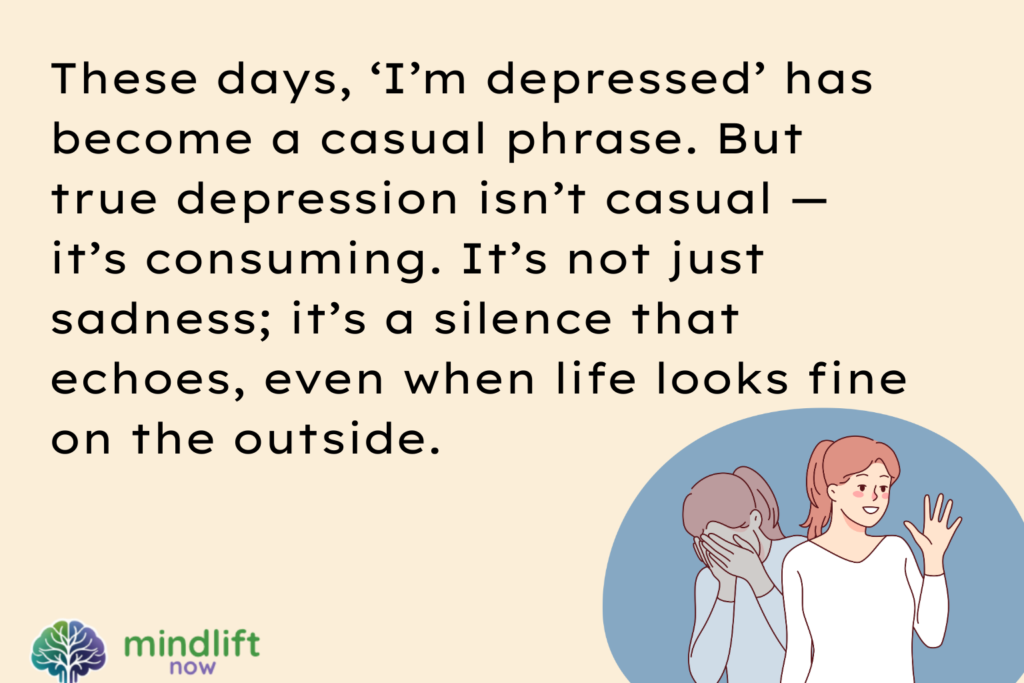
The difference between depression and typical sadness comes down to depth, persistence, and disruption. While sadness might ease with comfort or time, depression tends to linger. It can seep into your thoughts, energy, motivation, sleep, appetite, and even relationships.
Why It’s Important to Tell Depression Apart from Other Feelings
Sometimes people say, “I’m just lonely” or “I’m bored,” and assume they’re depressed. It’s easy to confuse these, but understanding the difference really matters.
- Loneliness is that ache of feeling disconnected. It usually eases when you reconnect or feel seen. Depression doesn’t always lift, even when you’re around others.
- Boredom is about lack of stimulation. It fades when you do something new or engaging. Depression can make you lose interest in things you used to love, even fun ones.
Sadness or grief are natural responses to loss or disappointment. Depression may start that way but it lingers, deepens, and begins to touch many parts of your life.

Research shows loneliness and depression can overlap, but they’re not the same. One can lead to the other, or they can coexist. Knowing the difference helps you (and others) get the right kind of care.
So when someone says, “I’m depressed,” when they really mean “I feel down today,” it’s not just a language mix-up, it minimizes what depression truly is. Clarity matters, especially for those who are really struggling.
Symptoms & Signs: How Depression Manifests
Depression goes far beyond just ‘feeling sad’, it can touch your emotions, thoughts, body, and daily life.. Here are some common ways it might appear:
Emotional / Mood Changes
- Ongoing sadness, emptiness, or tearfulness
- Irritability, frustration, or restlessness
- Loss of interest in things once you enjoyed them.
- Feelings of guilt, worthlessness, or self-blame
- Hopelessness or a bleak outlook on life
Cognitive / Thinking Changes
- Trouble concentrating or making decisions
- Negative or self-critical thoughts
- Thoughts of death or self-harm
Physical / Bodily Changes
- Fatigue or low energy
- Sleep problems – insomnia or oversleeping
- Appetite or weight changes
- Aches, pains, or digestive issues with no clear cause
- Slowed movements or restlessness
Social / Behavioral Changes
- Withdrawing from friends or social events
- Losing interest in hobbies or work
- Neglecting responsibilities or self-care
- Struggling in relationships
If several of these symptoms stick around for two weeks or more, it’s time to pay attention. That’s not “just a bad mood”, it’s a sign your mind and body need care.
Causes & Risk Factors
Depression doesn’t usually have one single cause, it’s a mix of factors that come together differently for each person:
- Genetics & family history: Some people are more predisposed to it.
- Brain chemistry & hormones: Imbalances in neurotransmitters like serotonin and dopamine can play a part.
- Stressful life events: Loss, trauma, relationship changes, or financial stress.
- Personality & thinking patterns: Low self-esteem, perfectionism, or negative thought habits.
- Medical issues: Chronic illnesses or certain medications.
- Social factors: Isolation, lack of support, or ongoing stress.
- Substance use: Alcohol or drugs can worsen or even trigger depressive symptoms.
Remember, having risk factors doesn’t mean you will develop depression, and some people experience it without any clear triggers at all.
Types of Depression
Depression shows up differently for different people, in intensity, duration, and even the triggers behind it. Understanding the type you’re facing can help you or your loved one find the right kind of care and compassion.
Major Depressive Disorder (MDD):
This is what most people mean when they talk about “clinical depression.” It involves intense sadness, emptiness, or hopelessness that lasts for at least two weeks and interferes with everyday functioning. People with MDD often lose interest in things they once enjoyed, feel exhausted for no reason, or find even small tasks overwhelming.
Persistent Depressive Disorder (Dysthymia):
Think of this as a milder but long-lasting form of depression. The symptoms might not be as severe as major depression, but they linger for two years or more. Someone with dysthymia might seem “generally unhappy” or “low-energy” most of the time, even when life appears stable on the outside.
Seasonal Affective Disorder (SAD):
This form of depression follows a seasonal pattern, often starting in late fall or winter and improving in spring or summer. It’s linked to reduced sunlight exposure, which can affect serotonin and melatonin levels. Common symptoms include low energy, oversleeping, increased appetite, and difficulty concentrating during darker months.
Melancholic Depression:
This type is more severe and tends to affect both mood and body. People with melancholic depression often feel worse in the morning, lose pleasure in nearly all activities, and experience strong physical symptoms like significant weight loss or slowed movements. It’s not just emotional, it deeply affects the body’s rhythm and energy.
Atypical Depression:
Despite the name, this type is actually quite common. People with atypical depression experience mood improvements after positive events (like receiving good news), but also deal with heavy feelings of rejection, fatigue, and increased appetite or sleep. It’s “atypical” because the symptoms don’t fit the traditional picture of depression, yet the emotional weight is just as real.
How Depression Is Diagnosed
A mental health professional will typically:
- Ask about your symptoms, how long they’ve lasted, and how they affect daily life
- Use standard diagnostic criteria (like the DSM-5)
- Rule out physical issues (such as thyroid problems or vitamin deficiencies)
- Sometimes use screening tools or questionnaires
It’s okay to explore your symptoms on your own, but only a professional can give a clear diagnosis and guide treatment.
What Helps: Managing Depression
Depression is treatable, and recovery is absolutely possible. There’s no single “fix,” but a combination of approaches often works best.
1. Talk Therapy (Psychotherapy)
- Cognitive Behavioral Therapy (CBT)
- Interpersonal Therapy (IPT)
- Behavioral Activation
2. Medication
Antidepressants (like SSRIs or SNRIs) can help some people. Always check with your doctor before starting or stopping any medication.
3. Lifestyle Support
- Regular physical activity
- Consistent sleep habits
- Nourishing food and limited alcohol or drugs
- Creating daily routines and small goals
4. Connection & Support
- Talking with trusted friends or loved ones
- Joining support groups
- Volunteering or getting involved in your community
5. Mindfulness & Self-Care
- Meditation, journaling, or gentle movement
- Creative outlets like art, music, or writing
- Celebrating small steps forward
Healing takes time and that’s okay. Progress isn’t always linear, but every effort counts.
When to Reach Out for Professional Help
Please reach out if you:
- Think about harming yourself or ending your life
- Feel your symptoms worsening or lasting for weeks
- Struggle to function at work, school, or home
- Find it hard to care for yourself or meet daily needs
You deserve help and support. Seeking it doesn’t mean you’re weak, it means you’re choosing to care for yourself.
If you found this helpful, you might also like our article on Anxiety.
Final Thoughts
Depression is real, heavy, and deeply misunderstood. It’s not something you can simply shake off and it’s not permanent, either.
With the right support, therapy, care, and small daily actions, healing is absolutely possible.
You deserve to feel human again: hopeful, connected, and alive. And even if it doesn’t feel that way right now, reaching out – telling just one person, is a powerful first step toward light.
You’re not alone in this. MindLift Now is here to walk beside you with understanding, guidance, and hope.
Frequently Asked Questions About Depression
Yes. Depression can show up as emptiness, irritability, or fatigue rather than visible sadness.
It varies. Major depressive episodes often last several months, while some forms (like persistent depressive disorder) can last years if untreated.
For mild cases, yes, healthy routines, therapy, and support can make a big difference. Moderate or severe cases may also need medication.
Not necessarily. Many people recover through therapy and lifestyle changes alone. Medication is one tool among many.
Sadness and loneliness are temporary and situational. Depression is ongoing, more intense, and affects multiple areas of life.
It’s okay to feel uncertain. Track your moods, reflect, and if things persist beyond two weeks, consider seeing a professional.
Sometimes, yes, but many people learn to recognize early signs and take steps to prevent relapse.
Reference:
https://www.mayoclinic.org/diseases-conditions/depression/diagnosis-treatment/drc-20356013
https://www.healthline.com/health/depression
https://www.health.harvard.edu/mind-and-mood/what-causes-depression

