
Introduction
Ever wondered why your heart races during an argument or why sleepless nights leave you feeling drained, irritable, and restless the next day? That’s cortisol, the hormone deeply connected to how your body responds to stress.
Understanding cortisol and stress isn’t just for scientists or doctors. It’s for anyone who’s ever felt emotionally exhausted, mentally foggy, or physically tense without fully understanding why. Often called the “stress hormone,” cortisol plays a crucial role in how we think, feel, and recover. But when it stays elevated for too long, it can quietly shape our mood, sleep, and even relationships.
This blog explores the science behind cortisol and stress, helping you see that managing stress isn’t about escaping life, it’s about understanding how your body communicates, so you can respond with awareness, compassion, and balance.
What Is Cortisol?
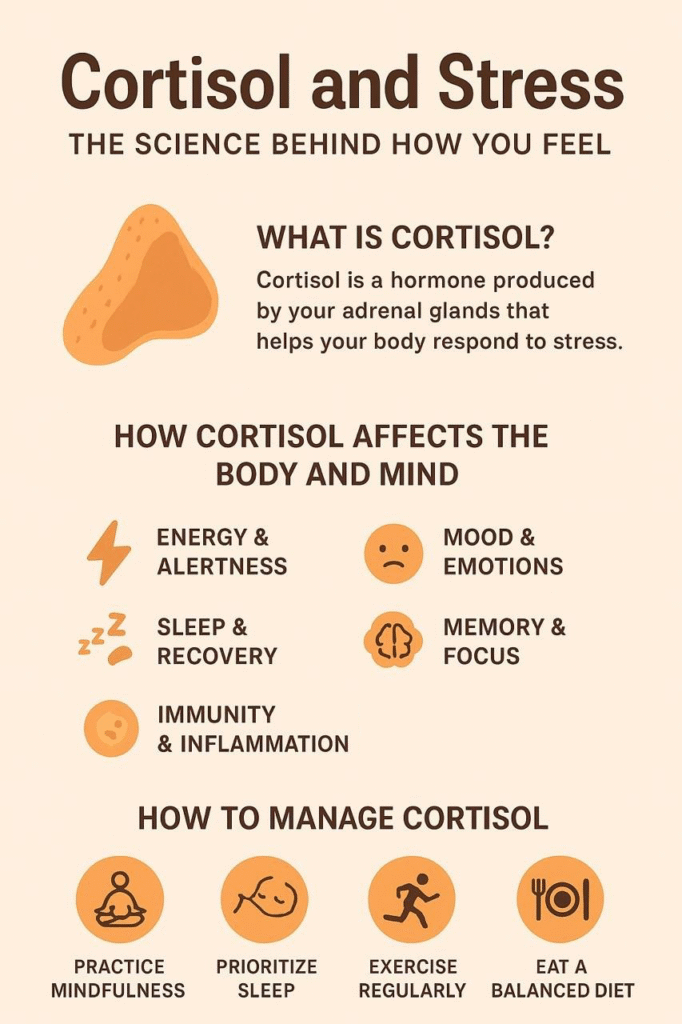
Cortisol is a steroid hormone produced by your adrenal glands, two small but powerful glands that sit just above your kidneys. Its main job is to help your body manage stress and maintain balance, a state known as homeostasis.
Whenever you face a challenge, whether it’s a tight deadline, an argument, or even emotional distress, your brain’s hypothalamus sends a signal to the adrenal glands to release cortisol.
This process triggers a chain reaction called the HPA axis (Hypothalamic–Pituitary–Adrenal axis), which is your body’s built-in stress circuit.
In a healthy rhythm, cortisol follows a daily pattern:
- High in the morning: to energize and prepare you for the day.
- Gradually lowers at night: to allow the body to unwind and rest.
This natural rise and fall are essential for mental clarity, stable energy, and emotional balance. The problem arises when stress becomes chronic and cortisol never gets the chance to reset.
How Cortisol Affects the Body and Mind
While cortisol is designed to protect you, an excess or imbalance can cause emotional and physical strain. Let’s explore how this small hormone has such a big influence.
1. Energy and Alertness
Cortisol helps mobilize glucose (sugar) in your blood, giving your body instant energy when you need to react quickly.
In moderation, that’s helpful. But when cortisol remains high for long periods, it can backfire leading to fatigue, energy crashes, or “wired but tired” feelings.
2. Mood and Emotions
Short bursts of cortisol make you alert and motivated. But chronic stress disrupts neurotransmitters like serotonin and dopamine, which can lead to mood swings, anxiety, irritability, and eventually burnout.
Over time, constant stress can desensitize your emotional system, making it harder to experience joy or calm.
3. Sleep and Recovery
Cortisol and sleep are closely linked.
Normally, cortisol levels fall at night, allowing your body to enter deep rest.
However, if stress keeps your cortisol high, you may find yourself lying awake, restless, or waking up at 3 AM with racing thoughts.
This lack of restorative sleep then raises cortisol even more creating a vicious cycle of stress and exhaustion.
4. Memory and Focus
The brain’s hippocampus responsible for learning and memory is highly sensitive to cortisol.
When levels remain elevated, concentration, decision-making, and recall all take a hit.
That’s why chronic stress often feels like “brain fog” . Your brain is too busy surviving to focus on thriving.
5. Immunity and Inflammation
Cortisol suppresses inflammation temporarily to help you handle short-term stress.
But when cortisol stays high, it can weaken immunity and increase long-term inflammation.
This makes you more prone to fatigue, infections, slow healing, and even autoimmune conditions.
Cortisol and Modern Life: Why It’s Rising
Our ancestors released cortisol during truly life-threatening moments escaping predators or surviving harsh conditions.
Today, however, the same biochemical alarm goes off for far less dangerous situations:
- Overflowing inboxes.
- Tight deadlines.
- Arguments, financial worries, or constant digital noise.
The body doesn’t distinguish between a wild animal and an unpaid bill; it reacts the same way.
Everyday Habits That Keep Cortisol High
- Constant multitasking and mental overload
- Overthinking or perfectionism
- Skipping meals or surviving on caffeine
- Lack of quality sleep
- Emotional suppression (“I’m fine” when you’re not)
- Rarely taking true breaks or rest
We were built for short bursts of stress, not to live in a state of cortisol-driven survival.
Signs Your Cortisol May Be Imbalanced
You don’t need lab tests to notice when your stress system is out of sync. Your body often whispers before it shouts.
Common signs include:
- Persistent fatigue, even after sleeping
- Weight gain (especially around the abdomen) or unexplained weight loss
- Mood swings, irritability, or anxiety
- Brain fog or forgetfulness
- Cravings for sugar or salty foods
- Trouble falling or staying asleep
- Feeling “tired but wired”
If several of these sound familiar, it might be your body’s way of saying: “Slow down. I’m overwhelmed.”
How to Manage Cortisol and Rebalance Your Stress Response
Managing cortisol isn’t about eliminating stress, that’s impossible. It’s about teaching your body safety and rhythm again.
Here are practical, evidence-based ways to restore balance.
1. Prioritize Rest and Routine
Your body thrives on predictability. Try to wake up, eat, and sleep at consistent times.
This stabilizes your circadian rhythm and helps your adrenal system find its natural balance again.
A short morning routine, even 5 minutes of stretching or deep breathing can signal your brain that the day is starting calmly, not in panic.
2. Breathe With Awareness
Your breath directly affects your nervous system.
When you breathe slowly and deeply, it activates the parasympathetic nervous system, your body’s “rest and repair” mode.
Try this simple technique:
- Inhale through your nose for 4 seconds
- Hold for 2 seconds
- Exhale gently through your mouth for 6 seconds
Repeat for 5 minutes daily. You’ll feel calmer, more grounded, and mentally clearer.
3. Nourish Your Body Wisely
Food is more than fuel, it’s communication with your stress system.
Eat regularly and include foods rich in:
- Magnesium (leafy greens, nuts, seeds) — calms the nervous system
- B Vitamins (whole grains, eggs, legumes) — support energy and mood
- Omega-3s (fish, chia seeds, walnuts) — reduce inflammation
Avoid skipping meals, excessive caffeine, or sugar spikes, all of which can disrupt cortisol and mood stability.
4. Move Your Body But Don’t Overexert
Exercise helps your body do what it’s built to do – release stress, rebalance, and recover.
But balance is key, too much intensity can actually raise it.
Gentle, consistent movement works best:
- Brisk walking in nature
- Yoga or tai chi
- Dancing or light strength training
Move in ways that energize you, not exhaust you.
5. Create Digital Boundaries
Constant notifications keep your brain on high alert.
Silence your phone during meals, mornings, and bedtime.
Try a “digital sunset”, 30 minutes before bed, disconnect from screens and reconnect with calm.
Your brain will thank you with better sleep and reduced anxiety.
6. Sleep – Your Natural Reset
Cortisol and sleep have an inverse relationship: as one goes up, the other goes down. Prioritize 7–8 hours of quality rest.
Tips for better sleep:
- Keep a consistent bedtime
- Avoid screens and caffeine late in the evening
- Journal your thoughts if your mind won’t quiet down
- Use calming rituals – herbal tea, soft music, or meditation
Sleep isn’t laziness, it’s your body’s most powerful form of stress repair.
7. Build Emotional Safety
One of the most effective ways to lower cortisol isn’t a supplement or a workout, it’s connection.
Open, honest conversations can physiologically lower stress hormones.
- Talk to someone you trust about how you’re really feeling
- Seek therapy if anxiety or sadness persist
- Join supportive communities or mindfulness circles
When we feel seen and understood, our bodies naturally relax. Emotional safety is biological medicine.
When to Seek Professional Help
Sometimes lifestyle changes alone aren’t enough.
If you’ve been feeling persistently anxious, exhausted, or emotionally detached even with rest and self-care, reach out to a healthcare professional.
Doctors or psychologists can:
- Run cortisol level tests (blood, saliva, or urine)
- Identify underlying causes (thyroid, adrenal fatigue, trauma, etc.)
- Recommend holistic or medical treatments
Seeking help isn’t weakness, it’s self-respect and self-awareness.
The sooner you address it, the easier your body can find its way back to balance.
Final Thoughts on Cortisol And Stress
Cortisol isn’t the villain of your story, it’s the messenger. It’s your body’s whisper: “I’m carrying too much. Please slow down and listen.”
When you start paying attention, everything shifts. You move from reaction to awareness, from exhaustion to empowerment. Managing stress becomes less about control and more about understanding.
So the next time your body feels tense, your thoughts race, or your energy dips, pause.
Your body isn’t betraying you; it’s protecting you. It just needs you to meet it halfway with rest, nourishment, and compassion.
Stress may be part of life, but peace can be too. At Mindlift Now, we believe balance begins when you start listening not just to your thoughts, but to what your body is quietly trying to say.
Frequently Asked Questions (FAQs)
Cortisol comes from your adrenal glands, and it’s your body’s built-in helper, the one that steps in to keep you steady when life gets stressful. It raises energy levels, regulates blood pressure, and supports your immune system. It’s called the “stress hormone” because it’s released during stressful situations to help you cope but too much for too long can harm your well-being.
Yes. Chronic high cortisol can lead to anxiety, fatigue, weight gain, and poor sleep.
Yes. Mindful breathing, meditation, and even prayer activate your body’s “rest and repair” mode, known as the parasympathetic nervous system. This response naturally lowers cortisol and helps calm your mind and body.
Common signs of high cortisol include fatigue, trouble sleeping, weight gain (especially around the belly), sugar cravings, brain fog, and frequent mood swings. Long-term elevation may also weaken your immune system and increase inflammation.
Sleep well, eat balanced meals, stay active, breathe deeply, and take breaks from digital stress.
Reference
https://my.clevelandclinic.org/health/articles/22187-cortisol
https://www.mayoclinic.org/healthy-lifestyle/stress-management/in-depth/stress/art-20046037