
Feeling overwhelmed and emotionally drained by the pace of modern life? You’re not alone. Many of us are searching for simple yet powerful practices to restore balance, inner peace, and emotional clarity. One such practice is Ho’oponopono, an ancient Hawaiian method of reconciliation, forgiveness, and self-healing. More than just words, it’s a life philosophy that helps release emotional burdens, mend relationships, and cultivate harmony within and around us.
In this blog post, you will explore what Ho’oponopono is, how it works, and practical ways to incorporate it into your daily life, along with real-life examples of its transformative power. Whether you’re new to spiritual healing or seeking a useful method to bring calm and clarity into your life, this guide is your essential starting point.
What Exactly Is Ho’oponopono?
If you’re passionate about inner healing and want more resources, don’t forget to visit MindLiftNow, your space for guidance on self-growth and mental well-being.
The Hawaiian word Ho’oponopono roughly translates to “to make right” or “to correct an error.” Traditionally, it was practiced in Hawaiian families and communities as a way to resolve conflicts, heal broken relationships, and restore unity. When disputes arose, elders or healers known as kahuna would guide a ritual of confession, repentance, forgiveness, and release.
In modern times, Ho’oponopono has evolved into a self-healing practice that can be done individually. Thanks to the efforts of Hawaiian kahuna Morrnah Simeona and later Dr. Ihaleakala Hew Len, it became widely known outside Hawaii. Today, it is recognized as a spiritual and emotional healing technique that allows us to clear negativity, release deep-seated beliefs, and return to a state of peace.
At its core, Ho’oponopono teaches you this: by taking 100% responsibility for our experiences, you can heal not just yourself, but also the situations and relationships around us.
Why Are the Four Phrases So Powerful?
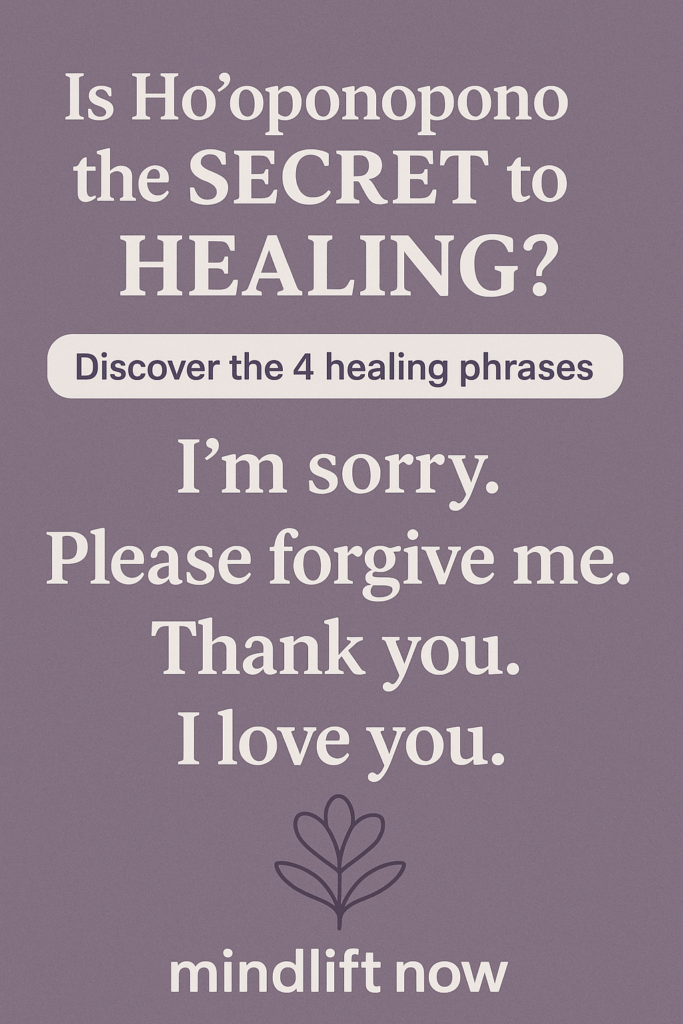
The modern practice of Ho’oponopono is centered around repeating four simple yet profound phrases. These phrases act as a kind of mantra for healing and release:
- I’m sorry – An acknowledgment of the issue or pain, even if you don’t fully understand how you are connected to it.
- Please forgive me – A request for forgiveness, from ourselves, others, and life itself.
- Thank you – An expression of gratitude for the opportunity to heal and grow.
- I love you – A reminder of the unconditional love that heals and restores.
While the words may seem simple, their power lies in the intention behind them. Each phrase opens the heart and mind to release negative energy and invite healing.
How Can You Practice Ho’oponopono Step by Step?
If you’re new to this practice, here’s a simple way to begin:
1. Find a Quiet Space
Sit in a comfortable position and take a few deep breaths. Create a calm environment, free from distractions.
2. Bring an Issue to Mind
Think of a situation, relationship, or feeling that is troubling you. It could be anger, resentment, stress, guilt, or even a painful memory.
3. Take Responsibility
Recognize that your perception of this issue is connected to your inner world. By healing yourself, you help shift the energy around the situation.
4. Repeat the Four Phrases
Softly repeat: I’m sorry. Please forgive me. Thank you. I love you.
You can repeat them in order, or focus on the phrase that resonates most in the moment.
5. Allow the Process
Don’t force emotions, simply allow the words and intention to work through you. Some days you may feel immediate relief; other times the healing may be subtle and gradual.
6. Close with Peace
After several minutes, imagine the situation or person surrounded by light and harmony. Take a deep breath, and release.
Can a 5-Minute Ritual Really Change Your Day?
For those who want to make this a daily habit, here’s a simple 5-minute morning practice:
- Settle In (1 min): Sit quietly, close your eyes, and breathe deeply. Place a hand over your heart.
- Choose a Focus (1 min): Think of yourself, someone close to you, or a situation that feels heavy.
- Repeat the Four Phrases (3 min): Say: I’m sorry. Please forgive me. Thank you. I love you. Let the words flow with sincerity.
- Close with Light (30 sec): Visualize healing light surrounding you or the situation, then gently return to your day.
Even this short ritual can bring more clarity, balance, and emotional resilience.
Who Has Practiced Ho’oponopono Successfully?
1. Traditional Hawaiian Families
When conflicts arose within families, such as disputes over land or betrayal, elders guided a Ho’oponopono process. Each person spoke openly about their feelings, acknowledged wrongs, and sought forgiveness. This collective healing restored peace and unity.
2. Morrnah Simeona’s Adaptation
Morrnah Simeona modernized Ho’oponopono into a practice of self-healing. Instead of always requiring a group process, she taught that individuals could take responsibility for their experiences and heal by repeating the four phrases. Her teachings spread globally and inspired countless people to integrate Ho’oponopono into daily life.
3. Dr. Ihaleakala Hew Len’s Psychiatric Work
Dr. Hew Len worked at a hospital for criminally insane patients in the 1980s. Rather than treating patients directly, he practiced Ho’oponopono by reading their case files and repeating the four phrases to heal within himself. Over time, the hospital environment transformed, patients calmed, healing occurred, and even staff morale improved. This story brought global attention to Ho’oponopono as a profound healing tool.
Note: Think of Ho’oponopono as a gentle therapeutic tool for self-reflection and emotional release, it’s not meant to replace your faith or medical care, but simply to support your journey toward inner peace.
What Benefits Can Ho’oponopono Bring Into Your Life?
Incorporating Ho’oponopono into your life can bring:
- Emotional Healing: Release guilt, resentment, and anger.
- Inner Peace: Create a calm mind and heart.
- Improved Relationships: Heal connections with loved ones through forgiveness and compassion.
- Self-Love: Strengthen your sense of self-worth and inner harmony.
- Spiritual Cleansing: Clear negative energy and subconscious patterns.
- Resilience: Approach challenges with clarity and openness.
Many people find that the practice shifts their perspective from blame to responsibility, from conflict to understanding, and from heaviness to lightness.
When Should You Use Ho’oponopono in Daily Life?
To see how Ho’oponopono can work in daily life, here are a few scenarios:
- At Work: Facing stress with a colleague? Instead of dwelling on frustration, silently repeat the four phrases to clear your inner tension. You may find your perspective softens, making space for better communication.
- In Friendships: If a friendship feels strained, you don’t have to confront the person immediately. Practice Ho’oponopono privately to release judgment and invite healing. You may notice the energy between you shift naturally.
- With Yourself: Struggling with guilt or self-criticism? Look in the mirror and say the four phrases to yourself. This helps restore self-love and acceptance.
So, Why Should You Try Ho’oponopono Today?
Ho’oponopono is more than just a healing practice, it’s a way of life rooted in forgiveness, love, and responsibility. By practicing these four simple phrases, I’m sorry. Please forgive me. Thank you. I love you. You can unlock deep inner healing, improve your relationships, and create a sense of peace that radiates outward.
Whether you integrate it into a 5-minute morning ritual or turn to it in times of conflict, Ho’oponopono offers a timeless path to emotional and spiritual well-being. Its simplicity is its strength, reminding us that profound healing often begins with small, intentional steps.
If you’ve been searching for a way to release past pain, let go of negativity, and restore harmony within, Ho’oponopono may be the gentle yet transformative practice you need.
What about you? Have you tried Ho’oponopono before? Share your experiences or thoughts in the comments below, your journey could inspire someone else to begin theirs.
For more tools, insights, and inspiration on inner healing, visit MindLiftNow, your trusted companion on the path to peace and self-growth.
FAQ’s About Ho’oponopono
Not necessarily. Ho’oponopono can be practiced as a mindfulness technique, a form of emotional release, or a spiritual ritual, depending on your personal beliefs.
Ho’oponopono is not a replacement for medical care. However, many people report emotional healing, reduced stress, and improved well-being, which can positively impact overall health.
That’s okay. Healing can be subtle and gradual. Over time, with consistent practice, you may notice shifts in your emotions, thoughts, or relationships.
Yes. By taking responsibility for your perception of a situation and practicing the four phrases, you may notice positive changes in the energy between you and others.
No, it is not tied to a specific religion. It is a cultural and spiritual practice from Hawaii that has been adapted for universal use.
Begin simply: choose one situation or feeling that weighs on you, take a few deep breaths, and gently repeat the four phrases: I’m sorry. Please forgive me. Thank you. I love you.
Reference:
https://healingbrave.com/blogs/all/hooponopono-prayer-for-forgiveness
https://mergingintooneness.medium.com/hooponopono-an-ancient-hawaiian-healing-technique-4dadb8273ec2
https://hooponoponopower.com/blog/the-correct-order-of-hooponopono

