
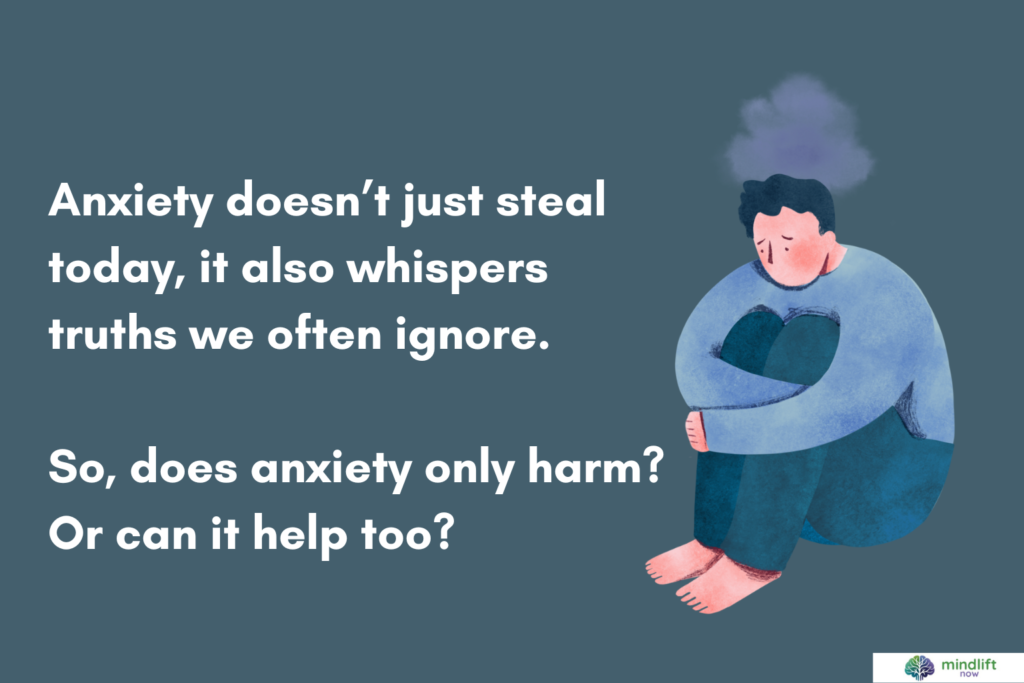
Anxiety isn’t just ‘worrying too much’, it’s your body’s way of signaling that something is important, a cue to pay attention.. But when it becomes constant, intense, and uncontrollable, it turns from helpful to harmful. In this article, you will explore:
- What anxiety really is
- Why it happens
- How do you feel it (mind and body)
- When it becomes a disorder
- Practical tools (mental, physical, and lifestyle)
- When to seek professional help
By the end, you’ll not only understand anxiety better but also have concrete steps you can try when it visits your mind.
What is anxiety?
It is a natural human reaction, a mix of unease, nervousness, or fear about an uncertain future. At a biological level, it’s linked to the “fight, flight, or freeze” response, a survival mechanism that kept our ancestors safe from danger. But in today’s world, stress often fires up even when there’s no real threat. Instead of helping us, it weighs us down with overthinking, restlessness, or fear of what might go wrong.
From the American Psychological Association perspective, anxiety is described as “an emotion characterized by apprehension and somatic symptoms of tension in which an individual anticipates impending danger, catastrophe, or misfortune.”
Does Anxiety Always Harm You?
Not necessarily. It’s important to see it on a spectrum:
- Healthy anxiety: Can spur us to prepare, protect, and adapt. It motivates you to prepare for an exam, show up on time, or stay alert in risky situations.
- Unhealthy/ disorder-level anxiety: Interferes with daily life. It might keep you awake at night, make you avoid opportunities, or lead you to believe that failure is inevitable.
Why Does Anxiety Happen?
Anxiety arises from a combination of biology, psychology, and environment. It’s not about being “too sensitive.” Let’s unpack:
1. Brain and Biology
Your brain is wired to protect you. The amygdala and hypothalamus trigger the classic “fight or flight” response whenever they sense danger, even if the danger is only in your imagination.
New research also shows certain brain circuits play a role in stress, and scientists have even linked over 100 genes to it. So yes, sometimes it’s part of your wiring.
2. Psychological and Cognitive Patterns
Anxiety often comes from the way you think. If you constantly expect the worst, replay old wounds, or grow up with shaky attachments, your mind is more likely to slip into anxious loops. Traits like being highly sensitive or striving for perfection can add to it.
3. External Stressors and Lifestyle
External stress piles on too. Work pressure, relationship issues, social media noise, or big life changes. And when you don’t sleep well, eat poorly, or stay inactive, your body becomes even more reactive. No wonder anxiety is rising, in fact, cases among young people shot up by 52% between 1990 and 2021.
How Does Anxiety Feel; Mind, Body and Behavior?
It shows up in physical, emotional, and behavioral ways. Often, those symptoms mingle, making it hard to see what’s happening inside you.
Physical Signs
- Heart racing, palpitations
- Sweat, trembling, shakiness
- Shortness of breath, tight chest
- Muscle tension
- Dizziness, nausea
- Sleep disturbance
- Trouble concentrating
Mental / Emotional Signs
- Worry that won’t stop
- Racing or intrusive thoughts
- Feeling on edge, irritability
- Restlessness or ‘wired but tired’
- Fear of losing control or dread about the future
Behavior / Life Impact
- Avoiding places, people, or thoughts that trigger mental tension
- Procrastination, perfectionism
- Social withdrawal
- Compulsive checking, reassurance seeking
- Physical symptoms interfering with work or study
Types of Anxiety Disorder
This isn’t one-size-fits-all. Some common types are discussed below:
- Generalized Anxiety Disorder (GAD): ongoing, excessive worry about everyday life events and situations.
- Social Anxiety Disorder: intense fear of being judged or embarrassed in social settings.
- Panic Disorder: sudden attacks of fear with symptoms like racing heart, sweating, or dizziness.
- Specific Phobias: strong, irrational fears of specific objects or situations.
- Obsessive-Compulsive Disorder(OCD) / PTSD: Overlap with worry, intrusive thoughts, hypervigilance.

Note: OCD and PTSD sometimes are categorized separately, but anxiety plays a strong role.
What Can You Do; 7 Practical Tools for Anxiety
You don’t have to eliminate stress, you can learn to work with it. Here are some science-backed and practical strategies. Start with one or two tools and focus on consistency rather than perfection.
1. Breath – Body Anchoring
Use a simple breathing exercise when anxiety strikes. Slow, deep breaths calm the nervous system. For example:
- 4-second inhale
- 6-second exhale
- Repeat 5–10 times, focusing only on the breath
This helps your nervous system move from “fight” to “rest.”
2. Grounding Techniques
Try the 5-4-3-2-1 method: notice five things you see, four you feel, three you hear, two you smell, and one you taste. Feel your feet on the floor, touch a textured object and say out loud: “Here, now. Safe, breathing.”
3. Cognitive Restructuring / Thought Records
Notice anxious thoughts and test them. Write down the thought along with evidence for and against it. Ask yourself what the worst-case scenario really is, how likely it is to happen, and how you would cope. Practicing this regularly weakens catastrophic thinking over time.
4. Behavioral Exposure / Gradual Confrontation
If you’re avoiding certain situations, take small steps toward them. Begin with low-pressure experiences, such as a small social gathering, and gradually increase the challenge. Track your progress and celebrate each small win.
5. Lifestyle Alignment
Daily habits have a big impact on mental tension. Aim for consistent sleep of seven to eight hours, stay physically active, and reduce caffeine, refined sugar, and heavy social media or news consumption.
6. Relaxation & Self-Soothing Practices
Take time to calm your mind and body. Try progressive muscle relaxation, guided imagery, or mindfulness and meditation. Nature walks, or journaling can also help soothe your system.
7. Professional Support
For more intense anxiety, professional guidance can be life-changing. Cognitive Behavioral Therapy (CBT) is highly effective, and medications like SSRIs or SNRIs are used in some cases. Stay informed about new treatments but approach them carefully.
When is it More Than ‘Just Stress’?
You know it might be time to take mental tension seriously when:
- It persists for weeks or months
- It significantly interferes with your work, relationships, or daily life
- You experience panic attacks
- You rely heavily on avoidance or safety behaviors
- You feel hopelessness, despair, or thoughts of harm
If any of these apply, please reach out to a mental health professional. You don’t have to face it alone.
Healing the Relationship with Anxiety (A Mindset Shift)
Stress doesn’t need to be your enemy. With patience, you can:
- Listen to what it’s trying to protect you from
- Accept its presence rather than fight it with denial or suppression
- Lean into the work of self-compassion (you’re not broken for having anxiety)
- Learn its patterns so you respond more gently over time
When you pair a positive mindset with practical tools, over time you create a resilient, calmer inner life.
Final Thought
Anxiety is part of being human, but it doesn’t have to ruin your life. With awareness, tools, and support, you can reclaim peace, clarity, and confidence.
Think of it this way: it is like an alarm system. Sometimes it rings for the right reasons, alerting you to danger or pushing you to prepare. Other times, it goes off without cause, keeping you stuck in a loop of worry. The key lies in learning when to listen and when to gently reset the system.
You don’t need to silence your mental tension completely. You need to understand it, manage it, and make space for calm to exist alongside it. Step by step, practice by practice, you can teach your mind and body to return to balance.
And remember, healing is not about rushing to the finish line. It’s about small, consistent choices that remind you: you are stronger than your anxious thoughts.
If you’re ready to deepen your journey, check out the resources at Mind Lift Now. You don’t have to travel this path alone.
FAQs
Anxiety is the body’s natural response to stress. It feels like worry, fear, or restlessness about uncertain situations or future events. While short-term anxiety can motivate action, long-term or intense anxiety can disrupt daily life.
Normal anxiety comes and goes with life’s challenges. But if it feels constant, overwhelming, or interferes with sleep, work, or relationships, it may be a disorder. Speaking with a mental health professional can give you clarity and a proper diagnosis.
There is no one-time “cure” for mental tension, but it can be managed. With therapy, healthy habits, mindfulness, and sometimes medication, many people reduce symptoms and live peaceful, productive lives.
It impacts both. Mentally, it can cause racing thoughts, fear, and restlessness. Physically, it can trigger a rapid heartbeat, chest tightness, stomach issues, sweating, or fatigue.
Not always. Mild anxiety can help you stay alert, focused, and prepared. But when it is constant or intense, it stops being helpful and may harm mental and physical health.
Start small. Breathing exercises, journaling, reducing caffeine, regular exercise, and mindfulness practices can calm the nervous system. Building these habits creates a strong base for managing it.
Seek help if it feels unmanageable, keeps you from living normally, or causes physical symptoms like chest pain, sleep problems, or constant fear. A therapist or doctor can guide treatment options.
Reference:
https://medlineplus.gov/anxiety.html
https://www.mayoclinic.org/diseases-conditions/anxiety/symptoms-causes/syc-20350961

