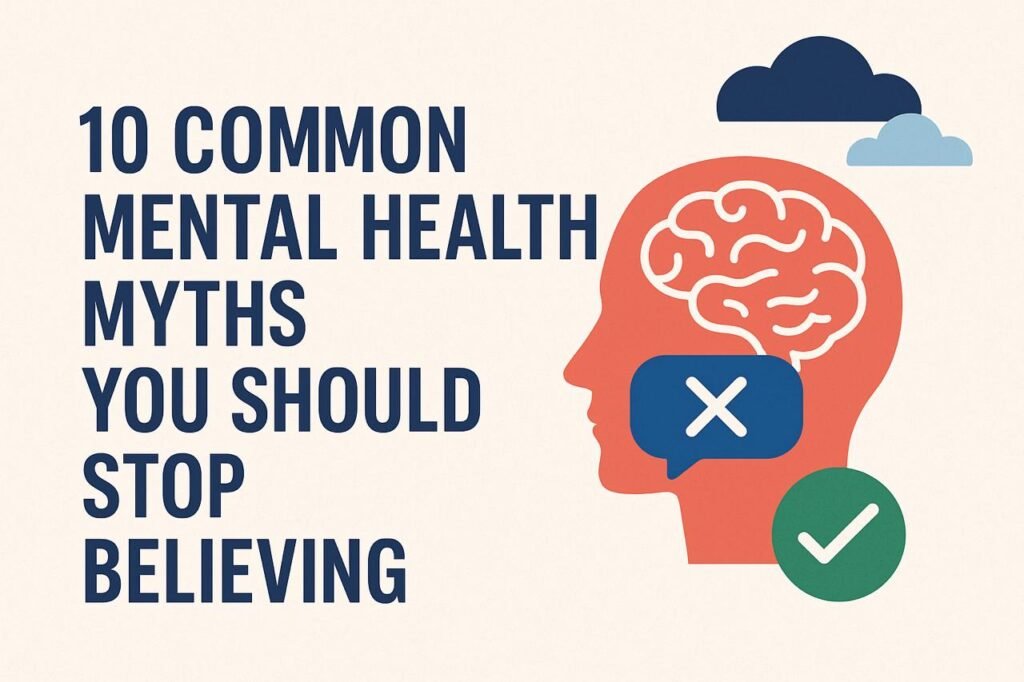
Mental health is finally getting the attention it deserves, but with that comes a flood of misinformation. Despite growing awareness, many mental health myths still cloud our understanding and create unnecessary stigma. The more we know, the better you can support yourself and each other.
It’s time to set the record straight. In this in-depth post, we’re diving into 10 of the most common mental health myths, breaking down why they’re false and what the reality is.
1. Myth: Mental health issues are rare
Reality :
Mental health conditions are incredibly common. According to WHO, mental disorders affect 1 in 8 individuals across the globe. These challenges are far from rare, they affect people of all backgrounds, ages, and walks of life. Understanding the prevalence helps reduce stigma. The more we acknowledge that mental health issues are widespread, the more likely we are to treat them with compassion and care.
2. Myth: Mental illness makes people more likely to be violent.
Reality :
The vast majority of people with mental health conditions are non-violent. The reality is that people with mental illness are more likely to experience violence than to cause it. This myth is perpetuated by media portrayals and contributes significantly to stigma.
It’s important to focus on facts rather than fear-based narratives. Most people managing mental health conditions live peacefully and contribute positively to their communities.
3. Myth: Mental illness means you’re weak
Reality :
Mental illness isn’t a character flaw, it’s a medical condition. Just like diabetes or heart disease, it can happen to anyone, regardless of strength, intelligence, or willpower.
Asking for help and confronting these challenges takes tremendous courage. Strength is found in vulnerability and the pursuit of healing. Busting these mental health myths can empower people to seek help without shame.
4. Myth: People with mental illness can simply “snap out of it.”
Reality :
While optimism and healthy coping skills are important, they are not cures for mental health conditions. Depression, stress, and other disorders involve chemical imbalances, environmental factors, trauma, and more.
Recovery often involves therapy, medication, lifestyle changes, and time. Suggesting someone should just “snap out of it” is not only unhelpful, it’s harmful. Criticism doesn’t help, compassion and understanding do. This mental health misconception is not only widespread but also deeply damaging.
5. Myth: Therapy is only for people in crisis
Reality :
Therapy can benefit everyone. You don’t have to wait for a crisis to seek support. Therapy isn’t just for emergencies, it’s a valuable tool for personal growth, managing stress, navigating relationships, and building emotional resilience.
Much like seeing a doctor for a check-up, therapy can be a preventative form of care. Just like you don’t have to be physically sick to benefit from going to the gym, you don’t have to be mentally unwell to benefit from therapy.
Debunking mental health myths like this can encourage more people to consider therapy as part of their wellness routine.
6. Myth: Medication Is the Only Solution
Reality:
While medication can be helpful, it’s often most effective when combined with therapy, self-care, and a strong support system. It is rarely the only solution. Mental health treatment is most effective when it’s holistic and tailored to the individual. Therapy, lifestyle changes (like improving sleep, nutrition, and exercise), mindfulness practices, and support systems can all play significant roles.
Each person’s journey is different. The key is finding the right combination of treatments that work for them. Believing in narrow mental health false beliefs like this one can limit a person’s options for healing.
7. Myth: It’s better to stay silent, talking about it can make things worse.
Reality:
Keeping mental health struggles hidden only deepens the pain. Honest, open dialogue is what helps people feel seen, heard, and supported. Talking about mental health can reduce stigma, foster connection, and encourage people to seek help.
When we create space for these conversations, whether in families, workplaces, or schools, we help normalize the topic and support those who are struggling. Speaking openly doesn’t make things worse; it makes healing possible. Shutting down conversation is one of the more dangerous mental health myths out there.
8. Myth: People with mental illness can’t lead successful or fulfilling lives.
Reality:
With the right treatment and support, many people with mental health conditions thrive in their careers, relationships, and personal lives. Countless individuals, including artists, entrepreneurs, leaders, and athletes, have openly shared their mental health journeys and accomplishments.
Mental illness is just one part of a person’s experience, it does not define their worth or limit their potential. Success isn’t about being free from struggle, it’s about how we adapt, grow, and keep moving forward. Overcoming these mental health myths is key to creating inclusive workplaces and communities.
9. Myth: Children and Teens Don’t Experience Mental Health Issues
Reality:
Children and adolescents can experience a range of mental health challenges, including anxiety, depression, ADHD, and trauma. Mental health challenges can start early, the CDC states that 1 in 6 young children (ages 2–8) has a diagnosed mental, behavioural, or developmental disorder.
Recognizing the signs early and offering appropriate support can have a lasting positive impact. Just like adults, young people benefit from empathy, understanding, and professional care. Debunking these mental health misconceptions helps ensure younger generations receive the support they need.
10. Myth: If Someone Looks Fine, They Must Be Fine
Reality:
Many people struggling with mental health conditions appear perfectly fine on the outside. High-functioning depression, anxiety, and other conditions often go unnoticed because individuals mask their symptoms well.
This myth is particularly dangerous because it can prevent people from getting help or being taken seriously. Always approach others with empathy and don’t assume you know their story based on appearances alone. It’s one of the most misleading mental health myths you need to unlearn.
Final Thoughts: Rewriting the Narrative
By debunking these mental health myths, we take a step toward reducing stigma and fostering a culture of understanding and acceptance. When we challenge misinformation and replace it with truth, we break down stigma and open doors for healing.
Mental health affects everyone, and understanding these truths helps us all become better friends, family members, colleagues, and human beings. Whether you’re walking your mental health path or supporting someone else on theirs, remember: You are never alone – help, hope, and healing are closer than you think.
Let’s continue to spread awareness, ask questions, and advocate for a future where mental health is treated with the respect and care it deserves.
Check Mind Lift Now – this blog reveals the perfect moment to put your mental well-being first!
Frequently Asked Questions (FAQ)
1. Why do challenging mental health myths matter?
Because misinformation fuels stigma, discourages people from seeking help, and can lead to harmful assumptions. Replacing myths with facts promotes understanding, empathy, and better support.
2. Are mental health issues really that common?
Yes. According to the WHO, 1 in 8 people globally live with a mental disorder. Mental health challenges are more common than most people think, and affect people from all backgrounds.
3. Can someone look fine and still struggle with mental health?
Absolutely. Many people with mental health conditions appear high-functioning or “fine” externally, but may be suffering silently. Mental health isn’t always visible.
4. Do you have to be in crisis to benefit from therapy?
Not at all. Therapy can benefit anyone. It’s a proactive tool for personal growth, stress management, relationship building, and emotional resilience.
5. Does seeking help mean I’m weak?
No, asking for help is a brave step toward healing, not a sign of failure. It takes courage to be vulnerable and take steps toward healing.
6. Are people with mental illness dangerous?
No. This is one of the most harmful misconceptions out there. Contrary to a common myth, people with mental illnesses are far more likely to be harmed than to harm others.
7. Can you just “snap out” of mental illness with willpower?
No. Mental illness is not about attitude or effort. Recovery often requires professional support, therapy, medication, and time, not just positive thinking.
8. Is medication the only solution for mental health conditions?
Medication can help, but it’s only one part of a comprehensive approach to mental health. Many people benefit from a holistic approach, including therapy, lifestyle changes, and community support.
9. Do kids and teens experience mental health issues?
Yes. Mental health challenges can begin early. In fact, 1 in 6 children aged 2–8 has a diagnosed mental, behavioral, or developmental disorder.
10. How can I support someone struggling with mental health?
Start by listening without judgment, offering compassion, and encouraging them to seek professional help. Even small acts of kindness and understanding can make a huge difference.
Reference:
https://www.who.int/news/item/09-06-2022-mental-disorders
https://www.cdc.gov/childrensmentalhealth/data.html
https://www.psychiatry.org/news-room/apa-blogs/mental-illness-and-violence